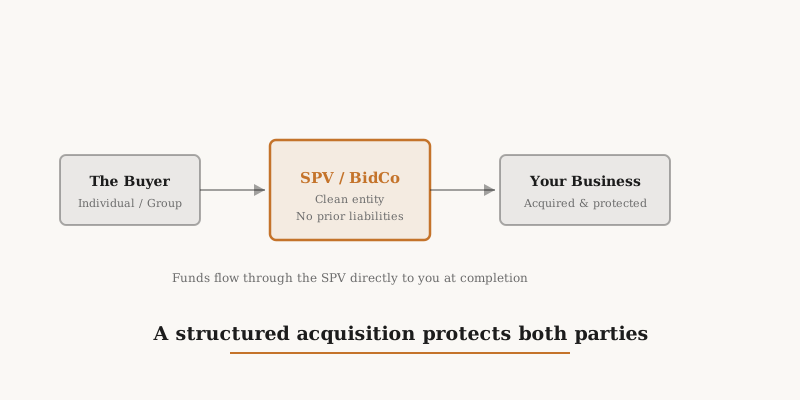
A Special Purpose Vehicle (SPV) is a new, standalone company that a buyer sets up purely to acquire your business, sometimes called a BidCo or a NewCo. It has no trading history and no liabilities beyond the deal, and a buyer using one is usually a sign of professionalism and experience, not a risk to your security.
Understanding how it works puts you in a stronger position as a seller.
If you’ve started exploring the sale of your business, you may encounter a buyer who tells you they’re acquiring through a “Special Purpose Vehicle” — often referred to as an SPV, a BidCo, or a NewCo. For many sellers, this is unfamiliar territory. What is it? Does it affect your security? Should you be concerned? The short answer is no — in fact, a buyer who structures their acquisition through an SPV is usually a sign of professionalism and experience. Understanding how it works puts you in a stronger position as a seller. What Is a Special Purpose Vehicle? A Special Purpose Vehicle is a new, standalone company created specifically for the purpose of acquiring your business. The buyer — whether an individual, a group of investors, or a company — sets up this new entity, funds it, and uses it to purchase your shares or assets. It has no existing business history, no other assets, and no liabilities unrelated to the transaction. Its sole purpose is to complete this acquisition and, after closing, to own and operate the business it has bought. A typical structure looks like this: The buyer (or their investment group) creates the SPV The SPV signs the sale and purchase agreement with you Funds flow into the SPV and are paid to you at completion After closing, the SPV owns your former business Why Do Professional Buyers Use SPVs? Experienced acquirers — from individual investors to private equity firms — almost universally use SPVs. There are good reasons for this: It contains risk cleanly. By separating the acquisition into a standalone entity, the buyer’s other businesses or investments are insulated from any unexpected issues that arise post-completion. This is standard risk management. It makes financing simpler. Lenders prefer lending to a clean entity with security over the specific assets being acquired. It reduces the complexity of the transaction and typically results in better financing terms. It simplifies governance. Any investors, co-founders, or management equity participants in the deal can be cleanly accommodated within the SPV structure without affecting the buyer’s wider operations. It makes future exits cleaner. If the buyer later sells the business, they can sell the SPV as a package — straightforward and well-documented — rather than having to carve assets out of a larger group. What Does It Mean for You as the Seller? This is the part that matters most. An SPV structure has several implications for sellers — most of them positive. Your payment is secured at completion The SPV is funded specifically for this transaction. The buyer commits equity, and often secures external financing, against the SPV before completion. When the deal closes, your funds are transferred from the SPV directly to you. You are not waiting for the buyer to liquidate assets elsewhere or free up cash from another business — the SPV exists specifically to pay you. Your former business is protected from the buyer’s other risks Because the SPV sits between the buyer’s wider group and your former business, your company — its people, its customers, its contracts — is insulated from any liabilities or complications that exist elsewhere in the buyer’s portfolio. Your business doesn’t inherit the buyer’s problems. Claims after completion are handled cleanly In any business sale, there are standard post-completion protections: warranties, indemnities, and sometimes an escrow amount held back for a period. These are managed at the SPV level. If a dispute arises, it is resolved within the defined framework of the SPV — not by tapping the operating business or making claims against assets unrelated to the transaction. You get a clearly defined counterparty One practical benefit that sellers sometimes overlook: the SPV is the legal entity you’re contracting with. It has clear documentation, a defined structure, and — critically — a clear chain of responsibility. If the buyer has made commitments to you as part of the deal (earn-out payments, employment guarantees, investment promises), those are obligations of the SPV and its backers, documented and enforceable. What to Look for as a Seller Understanding the SPV structure is useful — but knowing what to check is equally important. Who is backing the SPV? The SPV itself has no trading history, so the credibility of the deal rests on who is behind it. Ask to understand the buyer’s background, their track record of acquisitions, and their source of funds. A credible buyer will be transparent about this. Is there a parent guarantee or equity commitment? In well-structured deals, the buyer’s parent company or investment vehicle provides written commitments — equity commitment letters or limited guarantees — that back the SPV’s obligations. These give you additional security beyond the SPV itself. Are the funds available? Proof of funds or a confirmation from a lender that financing is in place is standard in a credible acquisition process. You should not reach advanced stages of a sale without this clarity. Is completion conditional on financing? Understand whether the buyer’s ability to complete is contingent on external funding that has not yet been finalised. Completion risk — the risk that a buyer can’t close — is reduced when financing is already secured. A Sign of Seriousness In practice, a buyer who proposes an SPV structure is signalling something important: they have done this before, they understand how acquisitions work, and they are approaching your transaction in a professional and structured way. Oceanus Group acquires businesses through a structured, SPV-based approach. We’re transparent about how we fund transactions, we provide appropriate documentation at every stage, and we don’t ask you to proceed without clear evidence that we can complete. If you’d like to understand more about how our acquisition process works — including how we structure transactions and what protections are in place for sellers — get in touch for a confidential conversation . You can also read about our full acquisition process here . Ready to explore your options? We're direct acquirers — no broker fees, total confidentiality, and no obligation to proceed. Start a Confidential ConversationReady to explore your options?
We're direct acquirers — no broker fees, total confidentiality, and no obligation to proceed.
Start a Confidential Conversation