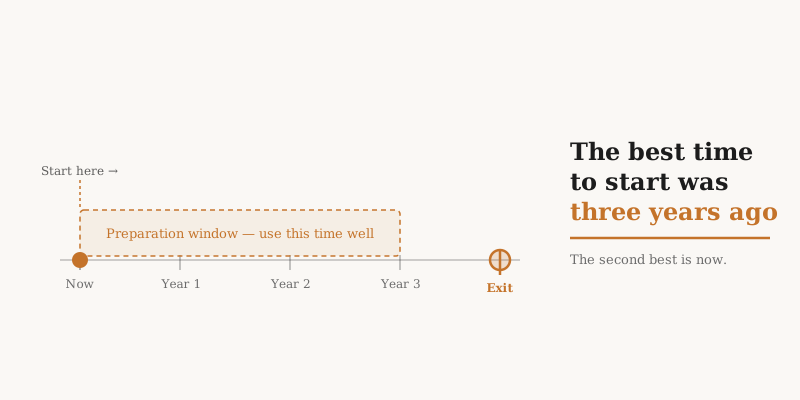
The best time to start planning your exit is five to ten years before you actually sell it, not in the year or two before you want out. Owners who start that early use the time to build a management team, clean up the accounts and diversify the customer base - small, deliberate decisions that compound into a business that is genuinely ready when the time comes.
The most common thing business owners say when they first speak to us is some variation of: "I'm not ready to sell yet, but I'm starting to think about it." They say it almost apologetically, as if they are wasting our time. They are not - they are doing the single most valuable thing an owner can do for their eventual exit: starting the conversation before the pressure is on.
The most common thing business owners say when they first speak to us is some variation of: “I’m not ready to sell yet, but I’m starting to think about it.” They say it almost apologetically, as if they are wasting our time. They are not. They are doing the single most valuable thing an owner can do for their eventual exit: starting the conversation before the pressure is on. The business owners who achieve the best outcomes when they sell are not always the ones with the best businesses. They are the ones who started thinking about the exit years before they needed to — and made a series of small, deliberate decisions that compounded into a business that was genuinely ready when the time came. Why Most People Start Too Late The typical pattern goes like this. An owner reaches a point — usually their mid to late fifties — where the energy required to run the business starts to feel mismatched with the rewards. They think seriously about selling for the first time. They speak to a broker, get a valuation, and discover that the business is worth less than they expected, or is difficult to sell in its current form, or would require two years of preparation before it could go to market properly. At which point they have two options: sell now, for less than they wanted, or spend two years fixing the things that should have been addressed years ago before selling. Neither is ideal. Both were avoidable. The irony is that the changes required to make a business genuinely sellable — building a management team, cleaning up the accounts, diversifying the customer base, documenting the processes — are also the changes that make a business better to own. They reduce the owner’s personal workload. They make the business more resilient. They increase profitability. They are good for the business regardless of whether a sale ever happens. Starting early is not just about the exit. It is about running a better business in the meantime. What Early Planning Actually Involves Planning an exit early does not mean putting the business on the market, approaching buyers, or telling your team anything. It means making a series of decisions about how you run the business that will leave you in a much stronger position when the time comes. Understanding what your business is actually worth. Most owners have a number in their head — usually higher than market reality. Getting a genuine assessment of your business’s current value, and understanding what drives that value, is an essential first step. It tells you the gap between where you are and where you want to be. Reducing personal dependency. If the business cannot function without you, a buyer will either discount heavily or walk away. Building a team and processes that operate independently of the owner is the single most impactful thing most business owners can do to improve their exit. It takes years, not months. The four stages of business ownership sets out what this progression looks like in practice. Cleaning the financial records. Buyers and their advisers will examine your last three to five years of accounts in detail. Personal expenses run through the business, inconsistent revenue recognition, undocumented director loans — all of these create friction and doubt. The cleaner the records, the smoother the process and the higher the price. Diversifying the customer base. A business where one customer represents 30% of revenue is a business with a serious valuation problem. Customer concentration is one of the most common issues that depress exit prices — and it takes time to fix. You cannot manufacture a diversified customer base in the months before a sale. Knowing what you want from the exit. Clean exit or gradual handover? Full sale or partial? Earn-out or clean price? These are not details — they are the shape of the deal, and knowing your own answers gives you much more negotiating leverage when the time comes. The Conversations Worth Having Now One of the most useful things an owner can do years before they are ready to sell is to speak to the kind of people who might one day buy their business. Not to negotiate, not to commit, but to understand what a credible acquirer is actually looking for. Those conversations demystify the process. They reveal what matters and what does not. They often prompt small changes in how the business is run — changes that take years to bed in, and that make a significant difference by the time the owner is genuinely ready to sell. We have those conversations regularly with owners who are five or ten years from selling. There is no agenda, no pressure, and no cost. The only outcome is that both parties understand each other better — which, when the time eventually comes, makes the whole process faster and more straightforward. What Changes When You Start Early The business owners who start thinking about their exit five to ten years out, and make deliberate decisions based on that horizon, tend to arrive at the sale with: A business at a higher stage of organisational development Cleaner, more attractive financial records A more diversified revenue base A management team capable of running the business after the owner leaves A clearer sense of what they want from the deal These are not abstract advantages. They translate directly into a higher sale price, a faster process, a cleaner deal structure, and — often — the ability to choose who they sell to rather than accepting whoever appears. None of it requires being ready to sell. It just requires being willing to think about it honestly — and to make a few decisions differently as a result. If you are at that point, even if the sale itself is years away, we are worth talking to . The earlier the conversation starts, the more useful it tends to be. Ready to explore your options? We're direct acquirers — no broker fees, total confidentiality, and no obligation to proceed. Start a Confidential ConversationReady to explore your options?
We're direct acquirers — no broker fees, total confidentiality, and no obligation to proceed.
Start a Confidential Conversation