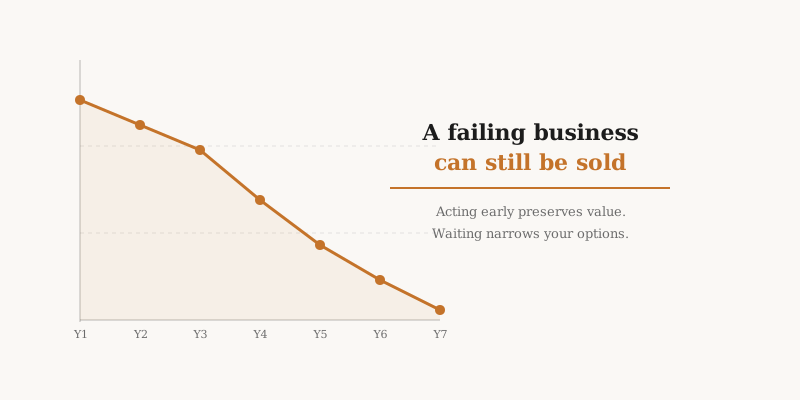
Yes, you can sell a failing business. Buyers who specialise in turnarounds, along with trade buyers, regularly pay for distressed businesses because they see value in the customer base, brand, assets or team that others overlook, even once the company itself has stopped being profitable.
Selling can feel like giving up, but for many owners facing declining revenue, cash flow pressure and creditor demands, it is the most rational and financially sound path available. HMV is a well-known example: after entering administration twice, in 2013 and again in 2018, the music retail chain was sold to Canadian retailer Sunrise Records in 2020. Sunrise took on over 100 stores and preserved more than 1,400 jobs, reviving the brand by focusing on in-store experiences, vinyl and music merchandise. A business that seemed finished found new life under new ownership.
Facing a failing business doesn’t have to mean the end. In many cases, a struggling business can still be sold — and with the right approach, it can be sold for more than you might expect. The Reality of Failing Businesses Distressed businesses face significant challenges: declining revenue, cash flow pressure, creditor demands, and the emotional weight of watching something you’ve built struggle. Selling may feel like giving up, but for many owners it’s the most rational and financially sound path available. You can read more about the case for selling in our article on why selling a distressed business might be the best option . HMV is a well-known example. After entering administration twice — in 2013 and again in 2018 — the music retail chain was sold to Canadian retailer Sunrise Records in 2020. Sunrise took on over 100 stores and preserved more than 1,400 jobs. The new owners revived the brand by focusing on in-store experiences, vinyl, and music merchandise. A business that seemed finished found new life under new ownership. Yes, You Can Sell a Failing Business The first step is acknowledging the situation honestly and understanding why the business is underperforming. This clarity is essential — not just for your own decision-making, but for presenting the business credibly to potential buyers. Buyers of distressed businesses are often experienced investors, turnaround specialists, or trade buyers who see value that others don’t. They may be attracted by the customer base, the physical assets, the brand, the location, the team, or simply the opportunity to acquire something at a fair price and improve it. There are also tax implications and legal considerations specific to distressed business sales. Working with experienced advisors — a specialist broker, a tax adviser, and a lawyer — is strongly recommended. Tips for Selling an Unprofitable Business Highlight the assets and potential, not just the problems. What does the business have that a buyer could build on? Loyal customers, intellectual property, equipment, a recognisable name, an established supplier network — these all have value even when profitability is absent. Price it realistically. An overpriced distressed business will not sell. Consider the value of the tangible and intangible assets, the liabilities that will transfer, and what a buyer would need to invest to turn things around. A realistic price attracts serious buyers; an inflated price attracts no one. Get your financial records in order. Buyers will conduct due diligence. Clean, accurate financial records — even if they tell a difficult story — inspire confidence. Hiding problems is not only counterproductive but can expose you to legal liability. Be transparent. Honesty about the business’s challenges builds trust. Buyers of distressed businesses expect problems; what they can’t tolerate is being misled. A seller who is open about what has gone wrong and why is far easier to do a deal with. Act early. The earlier you begin exploring a sale, the more options you have. Waiting until the business is in crisis narrows your choices and reduces the price you can achieve. Identifying Why the Business Is Failing Before putting the business on the market, it’s worth understanding — and being honest about — the root causes of its underperformance. Common reasons include: Insufficient capital investment Increased competition Poor management or marketing Pricing that doesn’t reflect costs or the market Declining demand for the product or service Understanding the cause helps you present the business honestly, and it helps buyers assess whether they can fix the problem. Valuing a Distressed Business Standard valuation methods don’t always apply to distressed businesses. The most relevant approaches are: Asset-based valuation — values the business based on what it owns minus what it owes. Relevant when the business has significant tangible assets and limited future earnings potential. Income-based valuation (discounted cash flow) — projects the future cash flows the business could generate and discounts them to present value. More relevant where there is a credible path to profitability under new ownership. Market-based valuation — compares the business to similar transactions in the same sector. Less reliable for small private businesses, but useful as a sense-check. A business broker or turnaround specialist can help identify the most appropriate method and produce a credible valuation to present to buyers. Conclusion Selling a failing business is possible. It requires clarity about the situation, honesty with buyers, realistic pricing, and professional support. The process may take longer and feel more complex than a straightforward sale — but the alternative, waiting until the business has nothing left to offer, is almost always worse. If your business is struggling, don’t wait until you’ve run out of options. Get in touch today for a confidential, no-obligation conversation. Ready to explore your options? We're direct acquirers — no broker fees, total confidentiality, and no obligation to proceed. Start a Confidential ConversationReady to explore your options?
We're direct acquirers — no broker fees, total confidentiality, and no obligation to proceed.
Start a Confidential Conversation