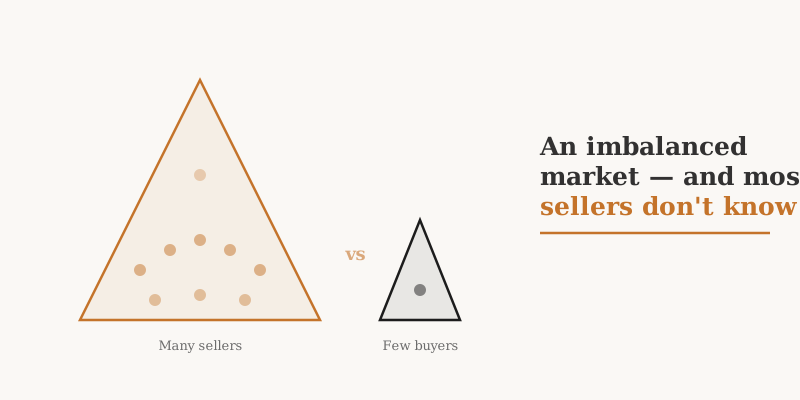
Selling a small business is harder than selling a large one because the two markets run in opposite directions. Large businesses, worth £25 million and up, are chased by a wide pool of private equity firms, sovereign wealth funds, listed corporates and family offices all competing for a small number of targets, which pushes prices up and gives sellers negotiating power. Small and medium-sized businesses face the reverse: hundreds of thousands of potential sellers, and only a narrow band of credible, funded, motivated buyers for businesses in the £200,000 to £20 million turnover range.
That structural imbalance, many sellers and few buyers, explains most of what goes wrong in small business sales. Understanding why is not cause for despair. It is the first step to doing something about it.
There is a question that every business owner should understand before they try to sell, but almost none of them do. It is this: where are the buyers? Not buyers in general. Buyers for a business like yours. A UK SME with £500,000 or £2 million or £5 million in turnover, a modest management structure, a loyal customer base, and decades of sweat equity behind it. Where, exactly, is the market for that? The honest answer is that the market is thin, fragmented, and fundamentally tilted against you. Understanding why is not cause for despair — it is the first step to doing something about it. Two Markets, Two Very Different Realities Imagine two triangles. The first triangle represents the market for large businesses — companies with turnover above £25 million, significant assets, institutional-grade management, and audited accounts. Place that triangle with its point at the top and its wide base at the bottom. At the top: a relatively small number of businesses that come to market in any given year. At the base: a very wide pool of potential buyers. Private equity firms. Sovereign wealth funds. Listed corporates doing acquisitions. Trade buyers with M&A teams. Family offices with capital to deploy. Specialist acquisition vehicles. These buyers compete for a limited number of targets, which pushes prices up and gives sellers negotiating power. Now flip that triangle. The narrow point is at the bottom and the wide base is at the top. That is the market for small businesses. At the wide top: hundreds of thousands of UK SMEs, all of them potential sellers at some point. Millions more if you count sole traders and micro-businesses that an owner might one day want to exit. At the narrow bottom: a surprisingly small number of credible, funded, motivated buyers for businesses in the £200,000 to £20 million turnover range. That structural imbalance — many sellers, few buyers — explains most of what goes wrong in small business sales. Why Are There So Few Buyers? This is worth unpacking, because it is not immediately obvious. The buyers who dominate the large business market — private equity, institutionals, large corporates — have no real appetite for small businesses. The deal economics don’t work. The due diligence cost of acquiring a £500,000-turnover business is not substantially lower than acquiring a £50 million one, but the return is a fraction of the size. For a PE firm managing a £300 million fund, writing a cheque for £750,000 is not worth the management overhead. That leaves the SME market largely to three types of buyers: individual investors looking to buy themselves a job, trade buyers who want a specific asset (a customer list, a location, a licence), and a small number of acquisition-focused vehicles like Oceanus Group that are specifically set up to buy in this space. Individual buyers are the most numerous but also the most problematic. Many are still financing their acquisition, still getting comfortable with the process, and still figuring out what they want. A significant proportion of those who express interest never complete. Of those who complete, many paid too little or structured the deal in ways the seller later regrets. Trade buyers can be excellent acquirers when they are the right fit — but they are usually looking for something specific, and if your business does not fit their strategic need exactly, they will not proceed regardless of how good it is. That leaves specialist acquisition vehicles as the most reliable buyer type — but they are rarer than sellers realise. What This Means in Practice The supply and demand imbalance has two direct consequences for anyone thinking about selling a small business. First, the process takes much longer than sellers expect. When a business is listed through a broker and placed in front of the general market, the pool of genuinely qualified buyers is small. Many enquiries will come from tyre-kickers — people who have not done the maths, who cannot access finance, or who simply lose interest once the reality of what they are taking on becomes clear. Deals that look promising in February fall apart in June. Brokers re-list. Prices are reduced. The business sits on the market for a year or more, accumulating the stigma that comes with being unsold. Second, sellers who understand the market go looking for buyers rather than waiting to be found. This is the single most effective thing you can do to improve your chances of a good exit. Rather than listing through a broker and hoping the right buyer appears, identify the types of acquirers who have both the means and the motivation to buy a business like yours, and approach them directly. The Counterintuitive Advantage Here is what the supply-demand picture looks like from the buyer’s side: there are genuinely good small businesses available to acquire that never reach the open market, because their owners either do not know where to look or approach the process the wrong way. A well-run SME with clean accounts, a capable team, and a real customer base is valuable to the right acquirer. The market failure is not that good businesses cannot be sold — it is that they cannot be sold through the wrong process. The owners who get the best outcomes are those who understand this market clearly enough to do three things. They prepare the business properly. They identify the right type of buyer for their specific business. And they approach the process as a targeted exercise rather than a passive listing. None of this is complicated. But it requires knowing that the market works this way in the first place. What Good Looks Like A business that exits well typically has a buyer who was identified deliberately, not discovered accidentally. The conversation started — often years before the sale — through a direct approach, a trusted introduction, or a relationship built over time. That is why the 80% of small businesses that never sell is not just a statistic about bad luck or bad timing. It is a structural outcome of a market that, without intervention, tends to fail the very sellers it is supposed to serve. Understanding the problem is the beginning of solving it. If you want to understand where your business sits in this market and what a realistic exit might look like, get in touch . There is no obligation — just an honest conversation with a buyer who is already in the market for businesses like yours. Ready to explore your options? We're direct acquirers — no broker fees, total confidentiality, and no obligation to proceed. Start a Confidential ConversationReady to explore your options?
We're direct acquirers — no broker fees, total confidentiality, and no obligation to proceed.
Start a Confidential Conversation