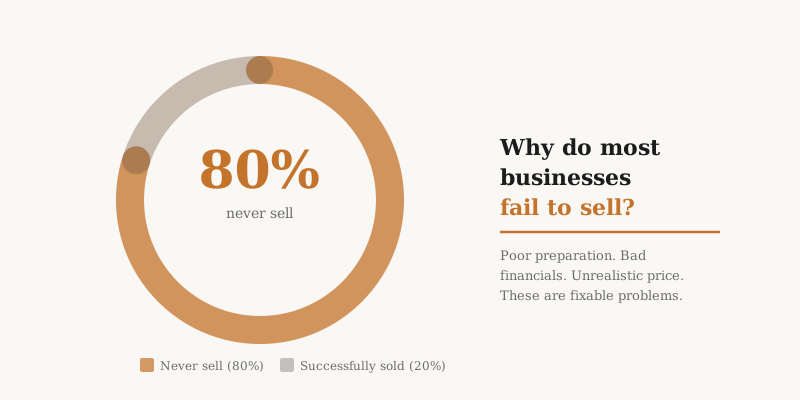
Most business owners struggle to sell because their business isn't ready: incomplete records, poor financial management, unrealistic valuations and marketing that never reaches the right buyers all put buyers off. Only around 20% of businesses that come to market actually sell, and legal complexity and the emotional weight of letting go make the odds even tougher.
Selling a business can be tough. Finding buyers, agreeing on value, navigating legal complexity, and managing the emotional weight of letting go — all of these create real barriers. The statistics are sobering: only around 20% of businesses that come to market actually sell. This post explores the most common reasons business owners struggle to sell, and what can be done to improve the odds. Unique Challenges Faced by Small Business Owners Small business owners face challenges that are distinct from those selling larger enterprises. These often include a lack of formal business structure, poor or incomplete financial statements, and unrealistic valuation expectations. Many entrepreneurs are also simply too busy running their business to properly plan or execute an exit. And there’s the emotional dimension — businesses built from the ground up over years or decades become deeply personal. That emotional attachment makes rational decision-making harder. The solution begins with early planning: getting professional help, setting realistic valuations based on actual financials, and keeping accurate records well before any sale process begins. Lack of Proper Business Planning and Preparation A business that hasn’t been prepared for sale is a business that’s hard to sell. Disorganisation, incomplete records, poor finances, and mismanagement all reduce the value of a business in the eyes of a buyer — and raise suspicion. Buyers need to understand how the business makes money, what its growth potential looks like, and what risks they’re taking on. If that information isn’t available or isn’t credible, buyers walk away. Preparation isn’t something you do the week before you decide to sell. It’s an ongoing process that ideally begins years in advance. Poor Financial Management Many businesses struggle to sell because their finances are in poor shape or poorly documented. Setting an unrealistic asking price is equally damaging — see our article on the consequences of overvaluing a business . This might mean: Errors in record-keeping or gaps in accounts Undeclared or mixed personal and business expenses Tax arrears or compliance issues No clear picture of recurring versus one-off revenue Buyers scrutinise financials closely. Any inconsistency raises doubt, and doubt kills deals. Getting accounts in order — ideally audited or at least reviewed by an accountant — is one of the most impactful steps a seller can take. Ineffective Marketing Even a good business can struggle to sell if it’s not properly marketed. Common mistakes include: Not reaching the right audience of potential buyers Failing to articulate what makes the business attractive or differentiated Over-relying on a single channel (print listings, for instance, miss the majority of today’s buyers) Reaching the right buyers requires a focused strategy. A small manufacturing company that only advertised in trade magazines found no interest — until it shifted to online and direct outreach, where it received multiple credible offers. Unwillingness to Adapt Businesses that are stuck in outdated practices — old technology, declining product lines, no online presence — are harder to sell. Buyers aren’t just buying the past; they’re buying the future. A business that hasn’t adapted is a business with a shrinking future. Entrepreneurs who are open to change, willing to invest in improvements before selling, and honest about what needs updating will always achieve a better outcome than those who expect a buyer to pay top price for a business that’s already falling behind. Strategies for a Successful Sale Despite the challenges, businesses do sell successfully every day. The common factors include: Thorough valuation — understanding what your business is actually worth, based on real financial data and comparable transactions. A comprehensive exit plan — knowing how you want to exit, over what timeline, and what deal structure suits you. This should be developed well before you’re ready to sell. Professional support — working with advisors who have done this before. Accountants, lawyers, and experienced acquirers can significantly improve both the process and the outcome. A strong online presence — buyers research businesses before making contact. A credible, up-to-date online presence matters. Networking — many successful business sales happen through direct relationships, not through listings. Speaking to potential buyers directly, or through trusted intermediaries, opens doors that formal processes don’t. Conclusion The key message is simple: failing to plan is planning to fail. Business owners who prepare early, maintain good records, get realistic about value, and seek professional support are far more likely to achieve the exit they want. If you’re thinking about selling — even if it’s years away — now is the time to start the conversation . Ready to explore your options? We're direct acquirers — no broker fees, total confidentiality, and no obligation to proceed. Start a Confidential ConversationReady to explore your options?
We're direct acquirers — no broker fees, total confidentiality, and no obligation to proceed.
Start a Confidential Conversation